
Do You Know Which of Your Suppliers Are Tariff-Exposed?

Trade policy moved faster in 2025 than most supplier records could keep up with.
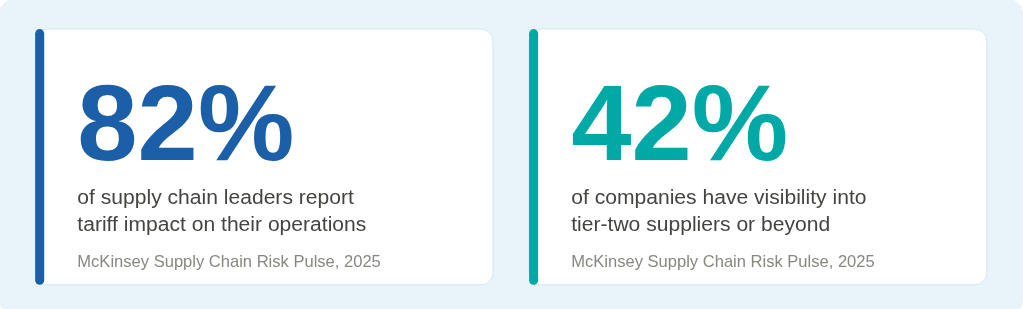
U.S. Customs and Border Protection collected more than $200 billion in tariffs in 2025, more than double any prior year. A 10% global baseline tariff is now in effect. And according to McKinsey's 2025 Supply Chain Risk Survey, 82% of supply chain leaders say their operations have been affected by new tariffs, with 20 to 40 percent of supply chain activity impacted.
Tariff exposure in your supply chain is determined primarily by your supplier records, specifically verified country of origin, HS codes, and sub-tier sourcing data. If those records are incomplete or out of date, your exposure picture is incomplete as well.
Most procurement teams don't have what they need. Not because they aren't paying attention, but because the data was never captured in a usable form. Country of origin is listed as "various." HS codes weren't required at onboarding. Sub-tier supplier relationships exist, but no one knows exactly where those components are manufactured.
When trade policy shifts, the teams with clean supplier records can model exposure and respond. The teams without them are guessing.
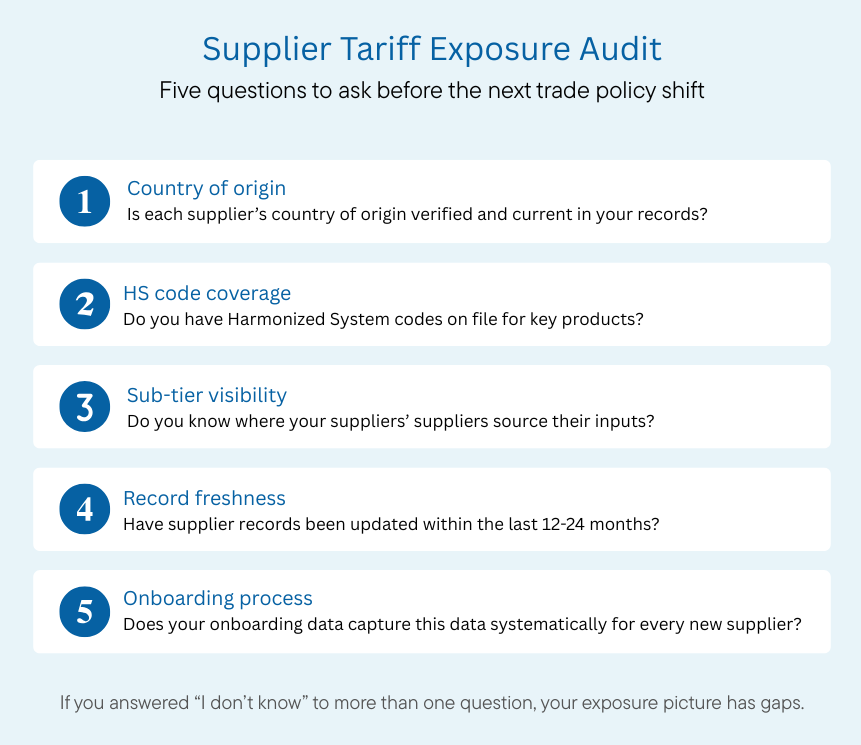
Here are five questions to ask yourself and your supplier records before the next trade policy shift.
1. Do you know each supplier's verified country of origin?
Not what the supplier told you at onboarding three years ago. Verified, current, and tied to an actual record you can produce if asked.
Tariff rates are applied by country of origin, and they change. A supplier who manufactured components in one country last year may have shifted production without notifying you. If your records reflect what you collected at onboarding and nothing since, your tariff exposure picture is already out of date.
The starting point for any tariff audit is a verified country of origin for every active supplier. If you can't produce that list in an afternoon, that's your first gap.
2. Do you have HS codes on file for your key suppliers' products?
Harmonized System (HS) codes are how tariff rates are applied. Different codes, different rates, sometimes dramatically so. Without HS codes in your supplier records, you're working from estimates, not data.
This matters because tariff schedules are product-specific. A blanket assumption about your exposure based on supplier geography will miss the nuance that determines whether you're looking at a 5% impact or a 25% one.
If HS codes weren't required during supplier onboarding, they almost certainly aren't in your records. Adding them, even for your top 20% of spend suppliers, changes what you're able to model.
3. Do you know where your suppliers'suppliers source their inputs?
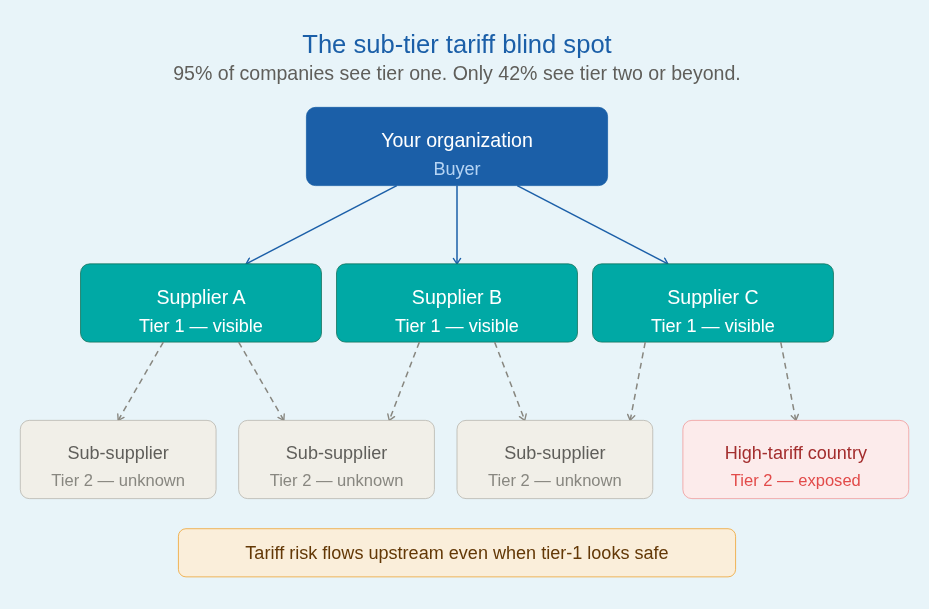
Sub-tier exposure is the blind spot in most tariff assessments.
Your direct supplier may be headquartered domestically. But if they source key components from a country with elevated tariff exposure, your cost and availability risk still exists. It's just one layer deeper. McKinsey found that while 95% of companies have visibility into their tier-one supplier risks, that visibility extends to tier two or beyond for only 42% of them. For manufacturers especially, this isn't a theoretical problem. It's why sourcing strategy changes are so difficult to execute quickly: the exposure isn't always at the tier you can see.
A preliminary sub-tier map, even for critical components only, is better than operating without one.
4. When did you last update supplier records for active relationships?
Supplier data decays faster than most procurement teams account for. Ownership changes, production locations shift, certifications expire. A record that was accurate at onboarding may not reflect today's reality.
Tariff vulnerability assessments are only as useful as the data underneath them. If your supplier records haven't been refreshed in 12–24 months, any exposure model you run against them is inherently imprecise.
A lightweight audit of your highest-spend, highest-exposure suppliers, focused specifically on geographic and production data, is a reasonable first step.
5. Do you have a process to capture this data going forward?
The harder version of the tariff exposure question isn't about your current suppliers. It's about new ones.
If your onboarding process doesn't collect verified country of origin, HS codes, and sub-tier dependencies as standard fields, you're building the same gap into every new supplier relationship. The next trade policy shift will find the same blind spots.
The teams that handle tariff volatility well don't just audit after a policy change. They build the data collection into onboarding so the information exists when it's needed.
 What to do with your answers
If you answered "I don't know" to more than one of these questions, you're not alone, but you are exposed.
The fix is structural, not difficult. It starts with knowing which suppliers need attention, capturing the right data fields in your records, and putting a refresh process in place.
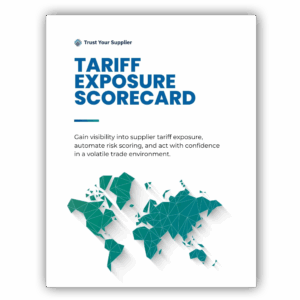
To see how TYS approaches tariff exposure measurement, download a sample of the Tariff Exposure Scorecard (TES). The TYS Tariff Exposure Scorecard shows the specific data points, scoring methodology, and risk indicators used to give procurement teams a supplier-by-supplier view of tariff vulnerability.
Frequently Asked Questions
What is tariff exposure in supply chain management? Tariff exposure refers to the financial and operational risk a company faces when trade policies impose duties on goods from countries where its suppliers manufacture or source components. The level of exposure depends on supplier country of origin, product HS codes, and sub-tier sourcing relationships — data that must be captured in supplier records to be actionable.
How do I assess my company's tariff exposure? Start by auditing five data points across your active suppliers: verified country of origin, HS codes for key products, sub-tier sourcing locations, record freshness (last update date), and whether your onboarding process captures this data systematically. Gaps in any of these areas represent blind spots in your tariff risk picture.
What is an HS code, and why does it matter for tariffs? A Harmonized System (HS) code is a standardized numerical code used internationally to classify traded products. Tariff rates are applied at the HS code level, meaning two products from the same country can have dramatically different duty rates depending on their classification. Without HS codes in supplier records, tariff exposure assessments are estimates rather than data-driven calculations.
What is sub-tier tariff exposure? Sub-tier tariff exposure occurs when a direct (tier-one) supplier is domestically based but sources components or raw materials from countries with elevated tariff exposure. The cost and availability risk flows upstream, meaning a company can be significantly tariff-exposed even if its immediate suppliers are not in a high-tariff country.
Sources
U.S. Customs and Border Protection — $200B tariff collection figure. CBP official press release, December 2025. cbp.gov
McKinsey & Company, Supply Chain Risk Pulse 2025, December 2025 — 82% tariff impact stat; 42% tier-two supplier visibility stat. mckinsey.com
10% global baseline tariff — U.S. trade policy effective April 2025 per White House executive order. Established policy record.