
When Supplier Risk Outgrows a Small Team

The hidden scaling problem in mid-market procurement.
For many growing companies, supplier risk doesn't arrive all at once. It builds quietly.
A few more suppliers here. A new market there. Another compliance requirement added to the list. At first, it feels manageable. Spreadsheets still work. Email follow-ups still happen. Everyone knows where the files live, at least most of the time.
Then something changes.
An audit request comes in. A supplier misses a certification renewal. A finance leader asks about exposure to a specific region or risk category. Suddenly, a small team is expected to deliver answers quickly and confidently across hundreds of suppliers.
This is when supplier risk outgrows the team managing it.
The Hidden Scaling Problem in Mid-Market Procurement
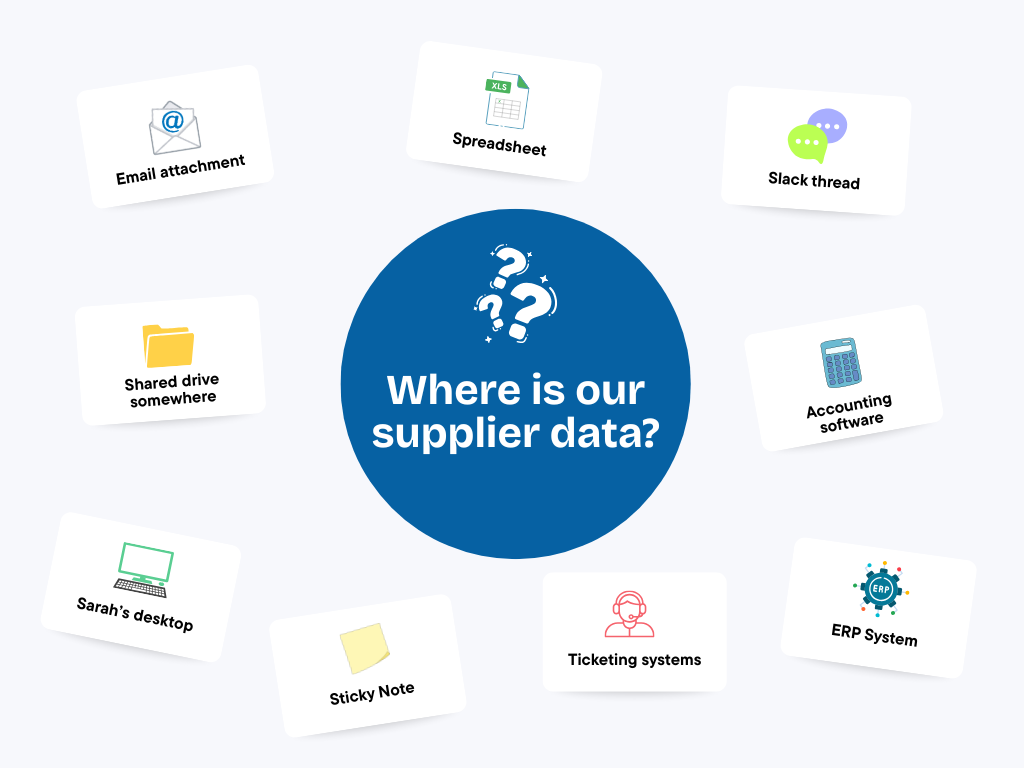
Mid-market procurement teams are built for efficiency, not excess capacity. A handful of people manage sourcing, onboarding, compliance coordination, and ongoing supplier relationships. There's rarely a dedicated risk function. Supplier data lives across tools, inboxes, and shared drives.
As the supplier base grows, risk doesn't just increase. It becomes harder to see.
Common warning signs include:
- Supplier documents stored in multiple locations with no clear owner
- Manual reminders for certifications, insurance, or regulatory forms
- Limited visibility into supplier financial health or ownership changes
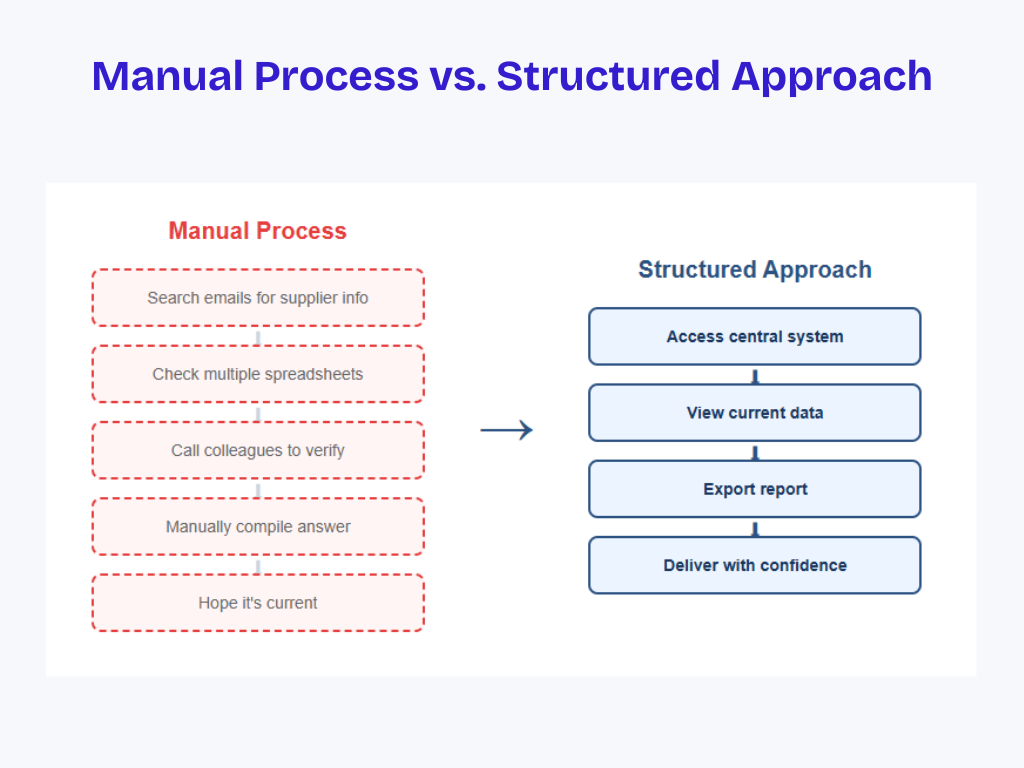
- Audit preparation that depends on chasing people and files
- Knowledge concentrated in one or two team members
None of these issues signal failure. They signal growth.
Why Risk Feels Manageable Until It Doesn't
 Supplier risk often stays invisible because problems are episodic. A single late document. A one-off exception. A supplier that 'has always been fine.'
Over time, those exceptions accumulate.
What makes this especially challenging is that risk rarely announces itself as risk. It shows up as:
- Extra hours spent preparing for audits
- Delays when onboarding or approving suppliers
- Uncertainty when leadership asks high-level questions
- Stress when key team members are out
By the time risk feels urgent, the team is already operating at full capacity.
The Limits of Manual Processes
Spreadsheets and shared folders aren't inherently bad. They're familiar, flexible, and fast to start. The problem isn't the tool. It's the scale.
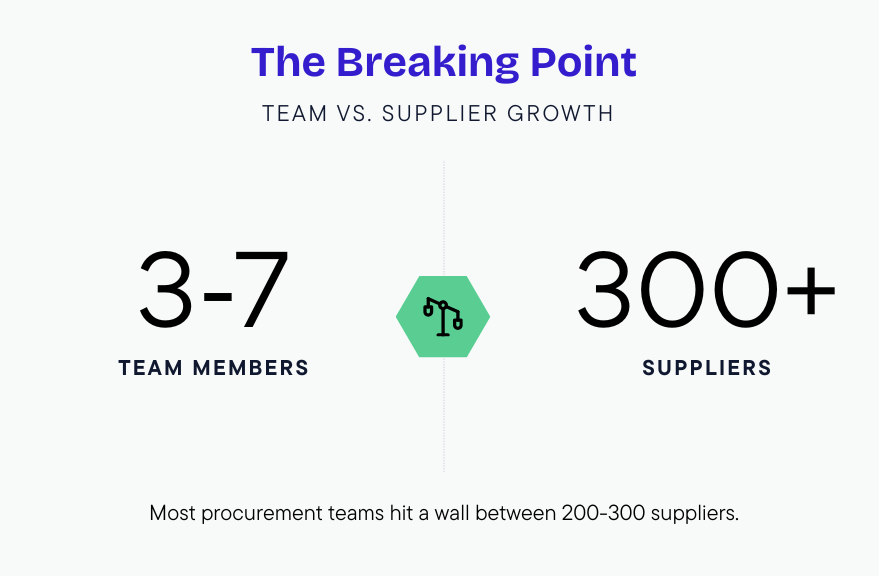
Once a supplier base reaches a few hundred active vendors, manual processes struggle to keep up with:
- Version control and document currency
- Consistent data across suppliers
- Ongoing monitoring rather than point-in-time checks
- Clear accountability for updates and reviews
At that stage, managing supplier risk becomes less about effort and more about structure.
What 'Right-Sized' Supplier Risk Management Looks Like
 Mid-market teams don't need enterprise complexity. They need clarity.
A right-sized approach focuses on:
- A single source of truth for supplier information
- Standardized data collection that's easy for suppliers to complete
- Clear visibility into compliance status and key risk indicators
- Ongoing monitoring that doesn't rely on manual follow-up
- Confidence that information is current when questions arise
The goal isn't to eliminate risk. It's to understand it without adding headcount or burden.
Why This Matters More as Companies Grow
Growth increases exposure. New suppliers. New regions. New regulations. At the same time, leadership expectations rise. Procurement is expected to move faster while reducing risk, not increasing it.
When supplier risk outgrows a small team, the answer is rarely 'work harder.' It's about putting a better structure around information that already exists.
Teams that address this early gain something valuable: breathing room. Less time spent chasing documents. Fewer surprises. More confidence in the answers they provide.
Moving Forward Without Overbuilding
Modern supplier management doesn't have to be heavy or disruptive. For mid-market organizations, the right tools support the team rather than overwhelm it.
The shift is subtle but important. From reacting to requests to being prepared. From scattered information to trusted data. From managing risk manually to seeing it clearly.
That's the difference between a small team stretched thin and a small team in control.
Making the Shift
Trust Your Supplier helps mid-market procurement teams gain control of supplier risk without enterprise-level complexity or additional headcount. Our platform gives you a single source of truth for supplier information, automated compliance monitoring, and the visibility leadership expects—all designed to support small teams managing growing supplier bases.
See it in action: Take our 5-minute interactive tour to explore how complete, verified supplier data flows from pre-qualification through onboarding into your systems.
Or schedule a conversation with our team to discuss how foundational onboarding could work for your organization.
This is Part 1 of our Supplier Management at Scale series:
Part 1: When Supplier Risk Outgrows a Small Team
Part 2: Supplier Management Scalability: Practical Steps for Growing Organizations
Part 3: How to Choose the Right Supplier Management Platform
Part 4: Common Supplier Onboarding Mistakes That Compound Over Time
Next: Read Part 2 → or Select from the full series below.