
How to Improve Supplier Data Quality Using Supplier Relationship Management

On a recent episode of the Road to the ProcureTech Cup, Joël Collin-Demers of Pure Procurement sat down with Gary Storr, Chief Sales and Marketing Officer at Trust Your Supplier, to unpack a challenge nearly every procurement organization faces: improving supplier data quality in a way that actually supports decision-making.
Rather than focusing on tools or technology first, the conversation centered on a more fundamental question. Why do organizations need supplier data in the first place?
Supplier Data Is a Decision Asset, Not a Database Exercise
As Gary emphasized, many supplier data initiatives struggle because they start with broad goals like “cleaner records” or “a single source of truth,” without clearly defining the decisions that data is meant to support. If data does not inform a real business decision, it becomes noise rather than value.
High-quality supplier data enables organizations to evaluate suppliers before engagement, proactively manage risk after contract signature, support finance, compliance, ESG, and sourcing decisions, and reduce friction during onboarding. These outcomes only materialize when data requirements are tied directly to business needs, not collected for their own sake.
One Supplier, Many Perspectives 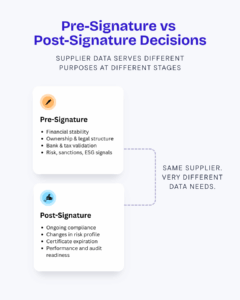
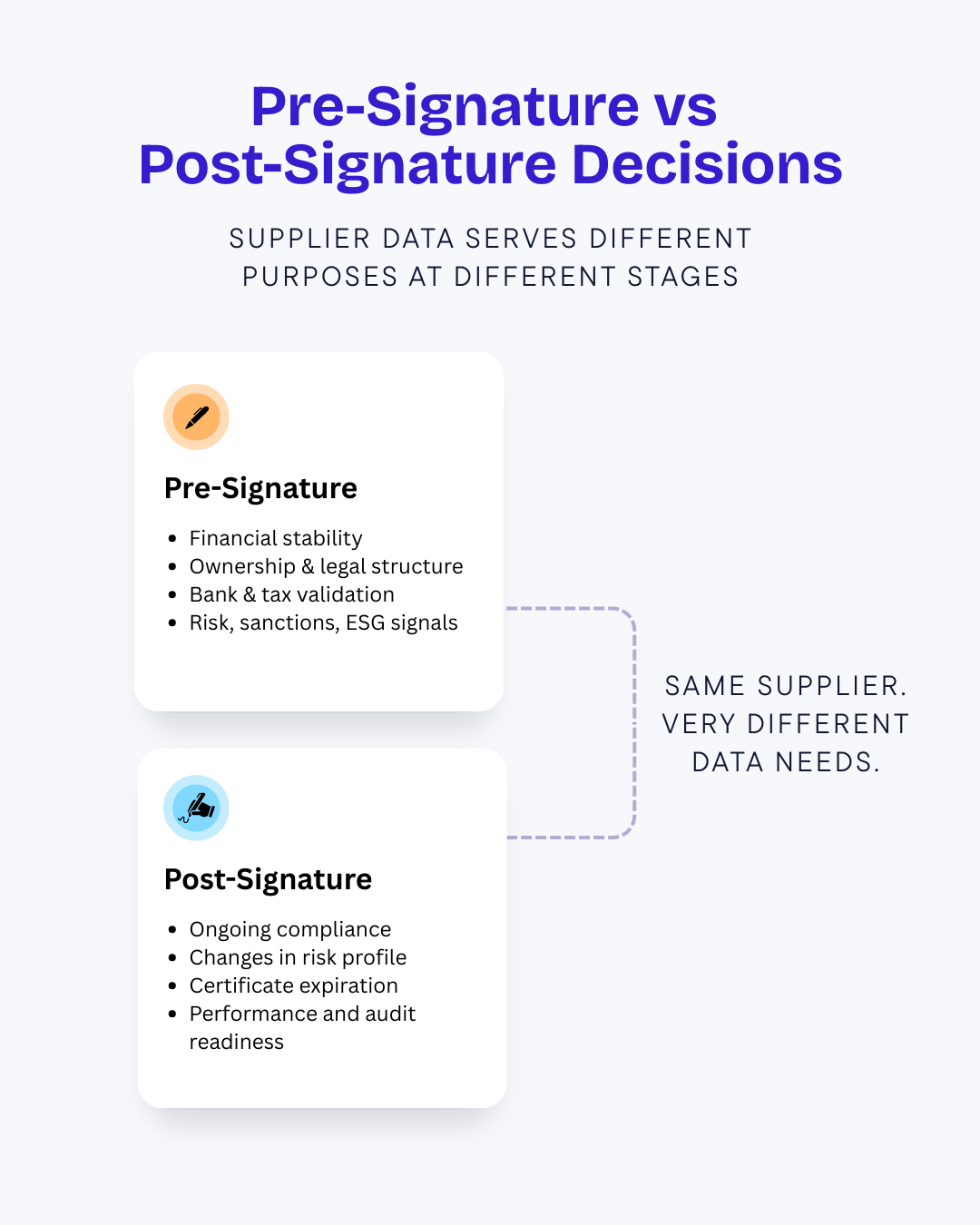
A recurring theme throughout the discussion was that supplier data serves different purposes at different stages of the supplier lifecycle. Pre-signature, organizations may focus on financial stability, ownership structure, sanctions exposure, and bank validation. Post-signature, the emphasis shifts to ongoing compliance, risk changes, certificate expiration, and audit readiness.
Importantly, Joël and Gary highlighted that different internal teams will naturally view suppliers through different lenses. Finance, compliance, ESG, IT, and procurement do not need identical data views to be effective. Modern SRM platforms should support these varying perspectives while maintaining a trusted, shared foundation of supplier information.
Trust Matters More Than Collection
While collecting supplier data has become easier over time, trust remains the real challenge. Internal records, supplier-provided data, and third-party intelligence must be accurate, current, and reputable to support confident decisions. Without trust in the data, even the most advanced analytics or AI capabilities fall short.
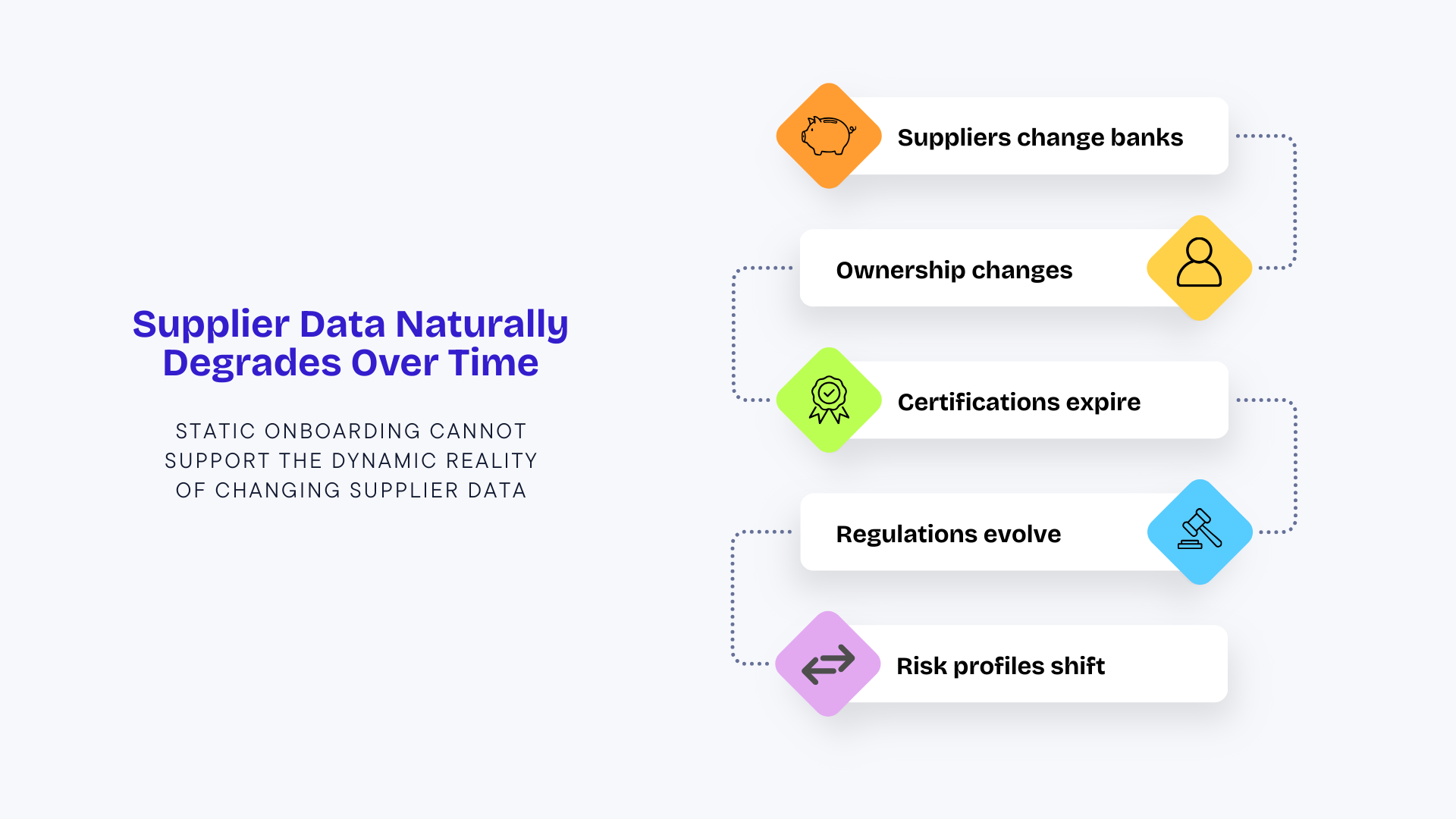
Gary stressed that supplier data naturally degrades over time. Banks change, ownership structures evolve, certifications expire, and regulations shift. A static onboarding snapshot cannot reflect this reality. Leading organizations move toward continuous validation and recertification, supported by automation that flags changes as they occur rather than relying on annual reviews.
From Onboarding Event to Ongoing Discipline
The episode concluded with a clear message. Supplier onboarding should not be treated as a one-time event, but as part of an ongoing supplier trust discipline. Organizations that mature in this area start with decision outcomes, treat supplier data as a lifecycle asset, automate validation wherever possible, and rely on reputable data sources to reduce risk and friction across the business.
The takeaway is simple but powerful. Better supplier data is not the end goal. Confidence is. Confidence to onboard faster, pay suppliers safely, pass audits, and manage risk proactively. As this episode made clear, SRM plays a central role in making that confidence possible.
Watch the full episode
Hear Joël Collin-Demers of Pure Procurement and Gary Storr of Trust Your Supplier discuss why supplier data quality is a lifecycle challenge, not a one-time event, and how SRM enables continuous trust.
See it in action:
Take our 5-minute interactive tour to explore how complete, verified supplier data flows from pre-qualification through onboarding into your systems. Or schedule a conversation with our team.