
China’s New Supply Chain Decrees: What Procurement Teams Need to Know Right Now

In early April 2026, China's State Council issued two new decrees that took effect immediately, with no grace period and no transition period.
Procurement and compliance teams with any China supply chain exposure need to be aware of them. We want to be straightforward: the full picture is still developing, and we do not have all the answers yet. But we did not want to wait until we did before making sure our community was informed.
Here is what we know.
What the Decrees Do
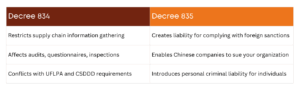
Decree 834, focused on supply chain security, restricts how organizations can collect information about Chinese suppliers and supply chains. Standard due diligence activities -- supplier questionnaires, ESG audits, on-site inspections, and third-party risk assessments involving Chinese entities -- may now conflict with Chinese national security law.
Decree 835 goes further. It authorizes China to take countermeasures against organizations that comply with foreign sanctions or regulations targeting Chinese entities. It also creates a private right of action: Chinese companies can now sue your organization directly in Chinese courts if they believe they were harmed by your compliance with U.S. or EU requirements.
The Core Problem
Many of the things your organization is legally required to do under U.S. and EU law -- sanctions screening, supplier vetting, due diligence reporting -- may now simultaneously create exposure under Chinese law. There is currently no clear safe harbor between these two positions.
The Stakes Are Higher Than Fines
What makes these decrees particularly significant is that they introduce personal criminal liability for individuals, not just organizations. Compliance officers, executives, procurement leaders, and legal staff could face personal criminal exposure in China for activities that are standard practice under Western regulatory frameworks. Organizations also face potential trade restrictions, investment bans, and placement on China's Unreliable Entity List.
What We Are Still Working Through
Enforcement patterns are not yet established. Legal interpretations are still evolving. We are actively working with counsel to understand how these decrees intersect with standard supplier risk processes -- including automated sanctions screening, due diligence questionnaires, and supplier risk functions.
We will be back with more as that picture becomes clearer.
What to Do Now
If you have China-based suppliers in your supply chain, it is worth raising this with your legal and compliance teams now. The regulatory environment shifted in April, and understanding your organization's specific exposure requires expertise in both Chinese law and the Western frameworks you are already operating under.
If you are already working through this internally and want to compare notes, reach out. We would rather work through this alongside you than leave you to navigate it alone.
We will continue covering developments on this topic. If you are not already subscribed to the Trust Report, our weekly newsletter on supplier governance, subscribe here.