
Trust Is the Real Metric in Supplier Data

Collecting supplier data has never been easier. Today, most organizations have no shortage of questionnaires, portals, spreadsheets, and systems capturing supplier information.
However, the real challenge is not volume. Instead, it is trust.
Before releasing a payment, teams must trust the bank details. Before an audit, they must trust compliance documentation. Before renewing or expanding a relationship, they must trust the underlying risk assessment.
Without trust, even the most comprehensive supplier database quickly becomes a liability waiting to surface.
Why More Data Is Not the Answer
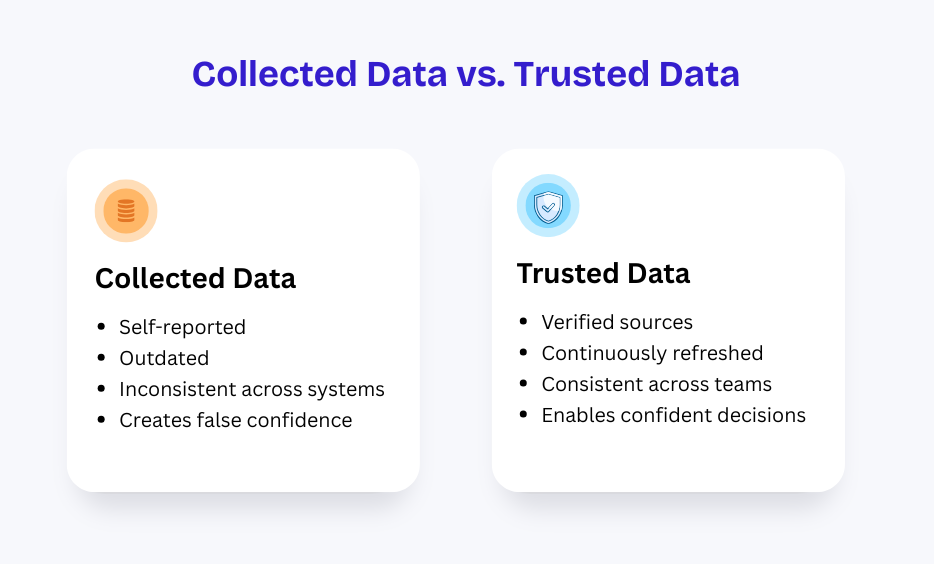
Procurement and risk teams often feel pressure to collect more data. More fields. More documents. More attestations. As a result, many organizations assume completeness equals control.
In practice, unverified or outdated data creates a false sense of confidence. Decisions rely on information that may be inaccurate, inconsistent, or no longer relevant. Consequently, payment fraud slips through, compliance gaps remain hidden, and risk quietly accumulates.
Ultimately, the strongest organizations are not the ones with the most data. Rather, they are the ones with data they can confidently act on.
What Makes Supplier Data Trustworthy
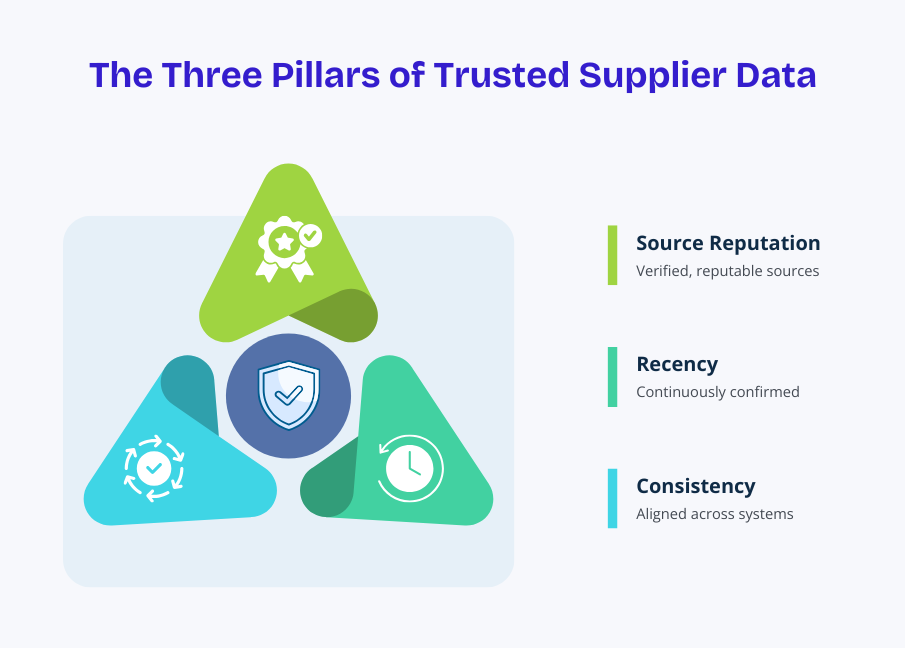
Trust in supplier data does not happen by accident. Instead, organizations build it deliberately around three core principles.
 Source Reputation
First, consider where the data comes from.
Although self-reported information has value, it only works when teams validate it. Trusted data comes from reputable, verified sources such as banks, regulators, and established third-party intelligence providers. Because these sources carry accountability and credibility, teams can rely on the information with greater confidence.
Recency
Next, timing matters more than many organizations expect.
Supplier data degrades quickly. Bank details change, ownership structures shift, certifications expire, and risk profiles evolve. As a result, information that was accurate six months ago may already be wrong today.
For this reason, trusted data is not collected once and forgotten. Instead, organizations confirm, refresh, and monitor information so teams work with current data rather than historical snapshots.
Consistency
Finally, consistency determines whether teams can act with confidence.
When finance, procurement, compliance, and risk teams see conflicting information for the same supplier, trust erodes. In turn, decisions slow down, manual checks increase, and errors become more likely.
By contrast, consistent data provides a shared, reliable view across the organization. As a result, every team operates from the same foundation.
How Trust Changes the Way Organizations Operate
When organizations shift their focus from collecting data to trusting data, their operating model changes.
Instead of relying on manual checks, teams automate validation. Rather than chasing documents, they embed third-party intelligence directly into supplier workflows. Over time, processes evolve to keep data current, not just complete.
Because of this shift, teams spend less time managing information and more time making informed decisions. Risk discussions become proactive, procurement moves faster, and confidence increases across the business.
The Real Goal of Supplier Data
The goal is not to build a larger supplier database.
Rather, the goal is to establish a foundation of trusted supplier data that supports payments, audits, renewals, and growth without introducing unnecessary risk.
In the end, that foundation separates organizations that move carefully from those that move quickly. The strongest organizations do both, because trust gives them the confidence to act.
The difference between having supplier data and trusting it is how it is validated and maintained.
Take an interactive tour to see what trusted supplier data looks like in practice.
Prefer to keep exploring the ideas behind trusted supplier data?
-
Read our perspective on improving supplier data quality
-
Watch our team discuss how trust breaks down in real supplier ecosystems